Is Polyester Safe for Kids' Skin? What Parents Should Know
- Polyester is not toxic, but it is not the best choice next to kids' skin.
- It traps heat and holds sweat, so it can feel hot and clammy.
- It can irritate sensitive skin, especially in hot, humid weather.
- For daywear and sleep, breathable cotton is the gentler pick.
Polyester is generally safe to wear and is not toxic, but it is not ideal against kids' skin because it traps heat, holds sweat, and can feel clammy. For everyday clothes and sleepwear, breathable cotton stays cooler and gentler.
Polyester is not the villain some posts make it out to be. It just has a job it does well, and jobs it does badly.
The trick is knowing which job you are dressing for. That one idea clears up most of the confusion parents run into.
Once you see polyester as a tool, the worry fades. You simply use it where it helps and skip it where it does not.
Here is the honest, balanced answer parents actually need.
🧵 Is polyester safe for kids' skin?
For most children, polyester is safe to wear and will not harm healthy skin.
The real issue is comfort, not danger. It is a synthetic fibre that does not breathe like cotton.
That means it can leave skin hot and damp, which is uncomfortable rather than unsafe.
For kids with sensitive or reactive skin, that trapped sweat can trigger itching or a rash.
Most kids will be perfectly fine in an occasional polyester outfit. The concern is daily, all-day wear right against the skin.
So the honest answer is: safe to wear, but not the kindest choice for all-day comfort.
Polyester is not toxic. The concern is that it traps heat and sweat, which matters most in India's hot, humid climate.
🌡️ Why does polyester feel hot and sticky?
Polyester is woven from plastic-based fibres that do not let air pass through easily.
Heat and sweat get held against the skin instead of escaping into the air.
On a warm afternoon or under a blanket, that turns into a sticky, clammy layer.
Cotton does the opposite, letting heat lift away so kids stay dry.
Sweat that cannot evaporate simply sits there. That is the clammy feeling children describe when they tug at a synthetic shirt.
That single difference is why a cotton tee feels cool while a synthetic one feels warm.
It is most obvious in an Indian summer or a stuffy classroom. The fabric that cannot breathe is the one you notice first.
👶 Can polyester irritate sensitive skin?
It can, mostly through trapped sweat and friction rather than the fibre itself.
Damp, warm skin under synthetic cloth is more prone to prickly heat and rashes.
Static and a slightly rougher feel can add to the discomfort for reactive skin.
In dry winter air, that static can make a top cling and spark. It is harmless, but genuinely annoying for a child.
If your child is eczema-prone, keep the layer touching the skin skin-safe cotton.
Watch how your child's skin looks after a full day, and let that guide your choice.
Red marks at the neck, waist or underarms are worth noticing. They often point to trapped sweat rather than the fibre itself.
Very cheap, shiny sets are often high in polyester. They look bright online but can leave kids sweaty and restless by midday.
✅ When is polyester actually fine?
Polyester has genuine strengths for specific jobs, so it is not off-limits everywhere.
It is quick-drying and water-resistant, which makes it useful for the right pieces.
For a rainy-day jacket or a swim set, those exact traits are the point. Here polyester genuinely earns its keep.
Sportswear is another fair use, since a quick-dry layer helps during a match. Just change kids back into cotton afterwards.
Polyester works for
- Raincoats and outer shells
- Sports jerseys for short bursts
- Swimwear
- Occasional party outfits
Cotton is better for
- Everyday t-shirts and tops
- Night suits and pyjamas
- Shorts sets for play
- Any all-day base layer
Use polyester for jobs it does well, and keep cotton against the skin.
📊 Polyester vs cotton for kids
The difference shows up on warm days and long wear. Here is the honest comparison.
| What matters | Cotton | Polyester |
|---|---|---|
| Breathability | High, air moves through | Low, traps heat |
| Sweat | Absorbs it | Sits on the skin |
| Feel on skin | Soft and gentle | Can feel clammy |
| Hot, humid days | Stays cool | Gets sticky |
| Best use | Everyday, sleep | Rainwear, sport |
🧴 Does polyester hold smells and static?
It tends to, more than cotton does. Synthetic fibres can hold onto sweat smells even after a wash.
That is why a polyester tee can smell again quickly on a warm, active day.
Polyester also builds up more static, which can feel clingy and a little scratchy.
Cotton stays fresher between washes and rarely clings, which is easier for daily wear.
If a favourite sports tee smells even after washing, the fabric is usually why. A cool soak with a little vinegar can help.
🛏️ Should kids sleep in polyester?
Better not, as a base layer. Sleep needs a steady, cool body temperature, and polyester works against that.
Trapped heat and sweat lead to more tossing, waking and clammy mornings.
A cotton night suit breathes through the night, so kids settle and stay asleep.
Save synthetics for outer layers you can remove, not the pyjamas next to the skin.
If winter nights are cold, layer cotton rather than reaching for a thick synthetic set.
Good sleep is too important to trade for a bright, cheap print. The layer against the skin is the one that matters most.
A little polyester in a blend for stretch is usually fine. Aim for mostly-cotton, and keep pure synthetics for outerwear.
🔍 How do I check what a garment is made of?
The label tells you most of what you need in a few seconds.
Fibre content is printed on the label for a reason. A quick read there saves a lot of guesswork later.
- Read the fibre label. Look for the cotton-to-polyester ratio.
- Feel the cloth. Slick or squeaky usually means high synthetic.
- Check for shine. A glossy sheen often points to polyester.
- Think about the job. Base layer? Choose cotton. Raincoat? Polyester is fine.
Four quick checks to know what is really touching your child's skin.
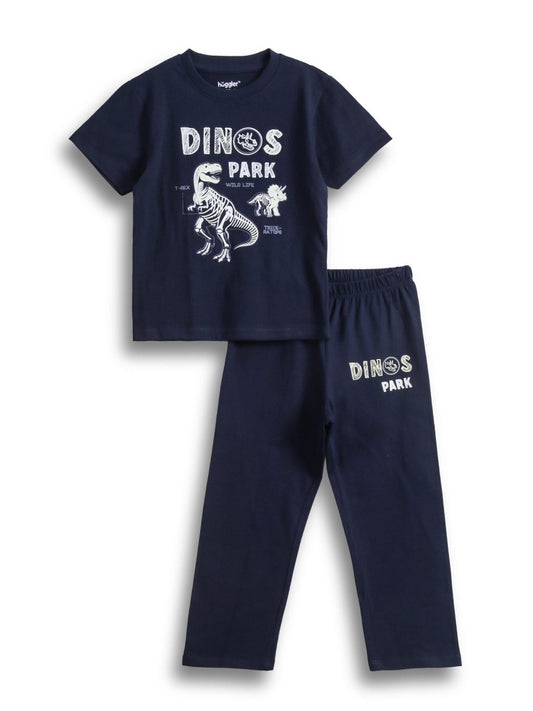
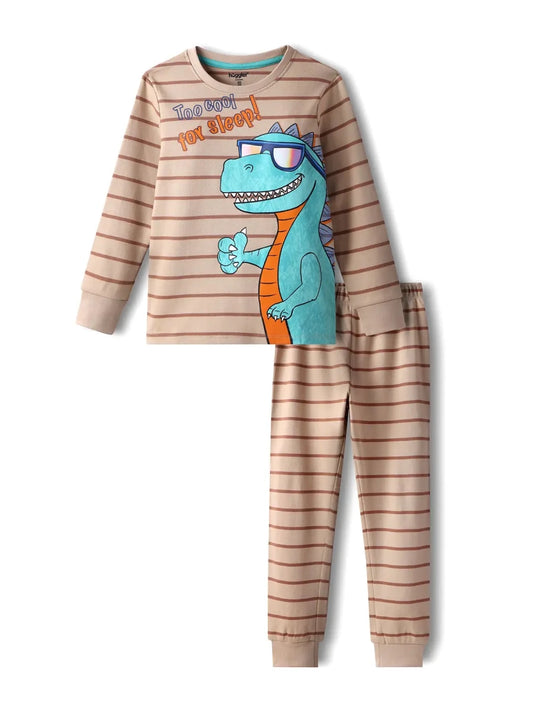
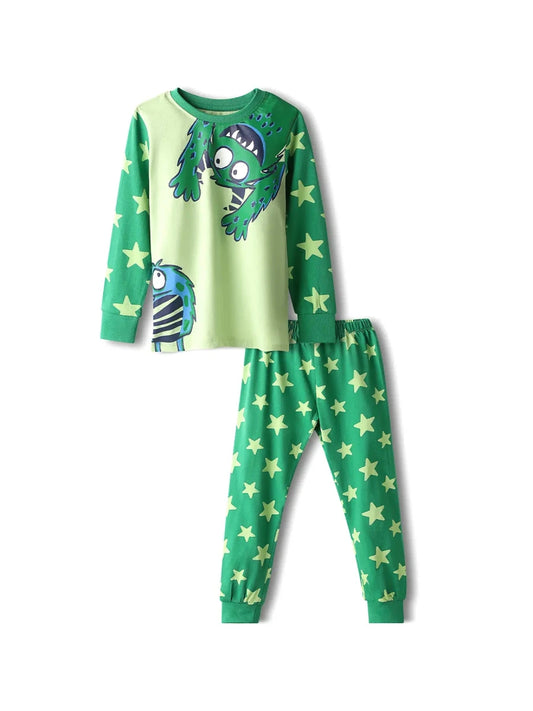
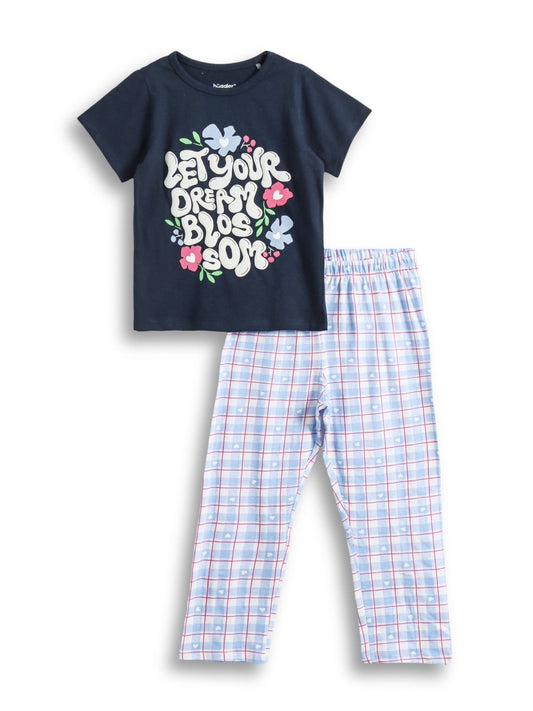
Huggler clothes are made from soft, pre-washed cotton, chosen to breathe and stay gentle on kids' skin, not to trap heat.
💛 What does Huggler choose instead?
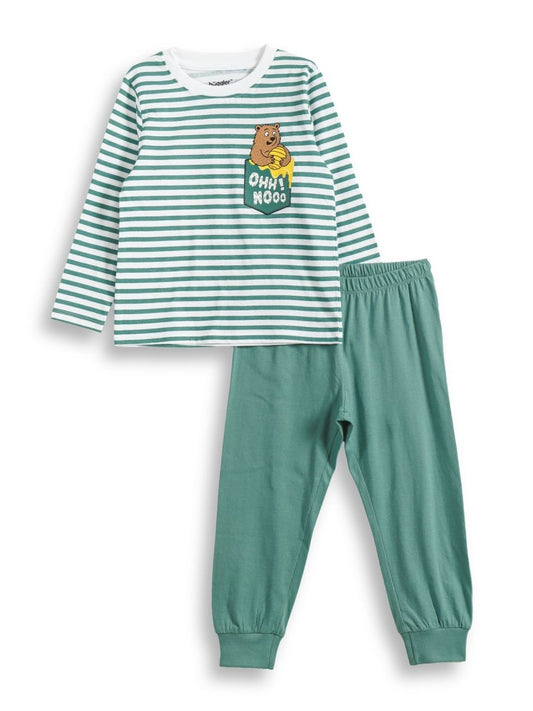
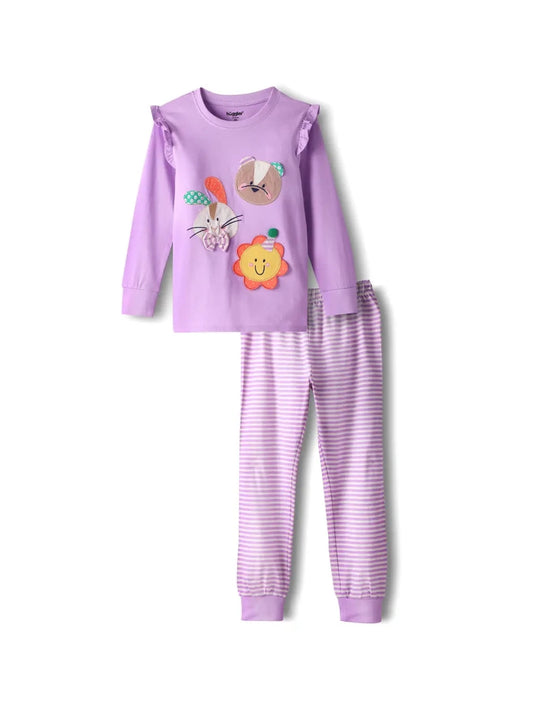
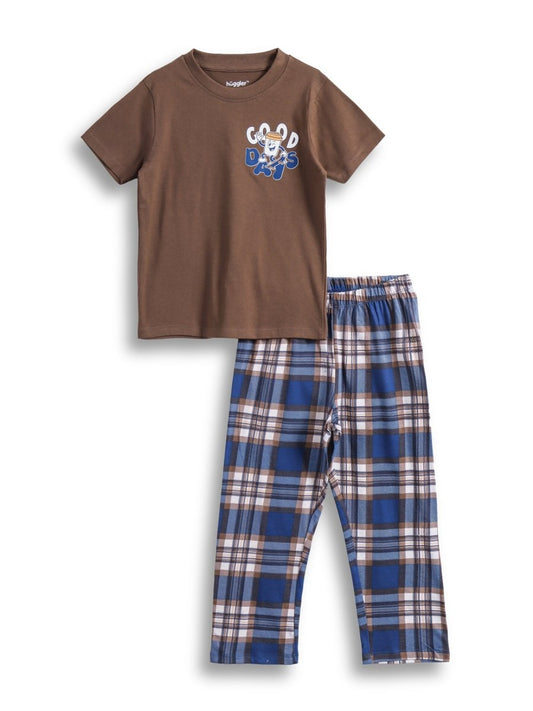
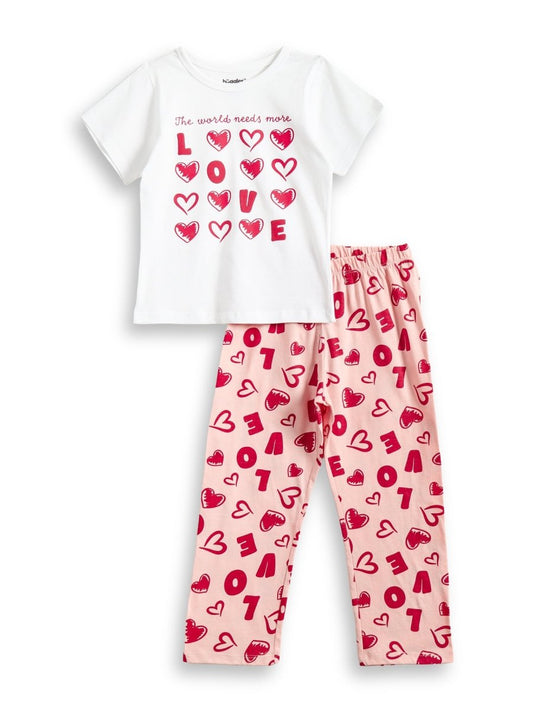
We build our night suits, tees and shorts sets from breathable, skin-safe cotton.
We source our cotton from Tirupur, India's knitwear capital, so we check how soft and airy it feels.
Choosing the cloth ourselves means we can hold it to a high standard every time. Softness is not left to chance.
Everything comes in eight age-based sizes from 2–3Y to 9–10Y, in a relaxed fit.
The prints are playful, and the fabric underneath is made to keep kids cool.
We keep any stretch fibres to a minimum and let cotton do the work. The result breathes the way children need it to.
💬 FAQ
Is polyester toxic for children?
No. Polyester is not toxic. The main drawback is that it traps heat and sweat against the skin.
Can babies wear polyester?
Better to avoid it as a base layer. Soft, breathable cotton is gentler and less likely to overheat a baby.
Is a cotton-polyester blend okay for kids?
A mostly-cotton blend is usually fine and adds stretch. Keep pure polyester for outerwear and sport.
Why does my child sweat more in polyester?
Because it does not breathe. Heat and sweat stay trapped instead of escaping into the air.
Choose cloth that lets kids breathe. Explore our cotton night suits, shop boys' night suits and girls' night suits, and check the fit in our size guide. 💛

Written by the huggler team
The designers and parents behind huggler — soft, 100% cotton kidswear with original in-house prints, made in Tirupur and worn by 20,000+ Indian families. We write these guides from what we make and what our customers ask us. About huggler
From huggler
Shop kids' cotton night suits
Soft, pre-washed 100% cotton night suits in age-based sizes, made in Tirupur.
Also useful: Size guide · Fabric guide · FAQ · All parent guides